

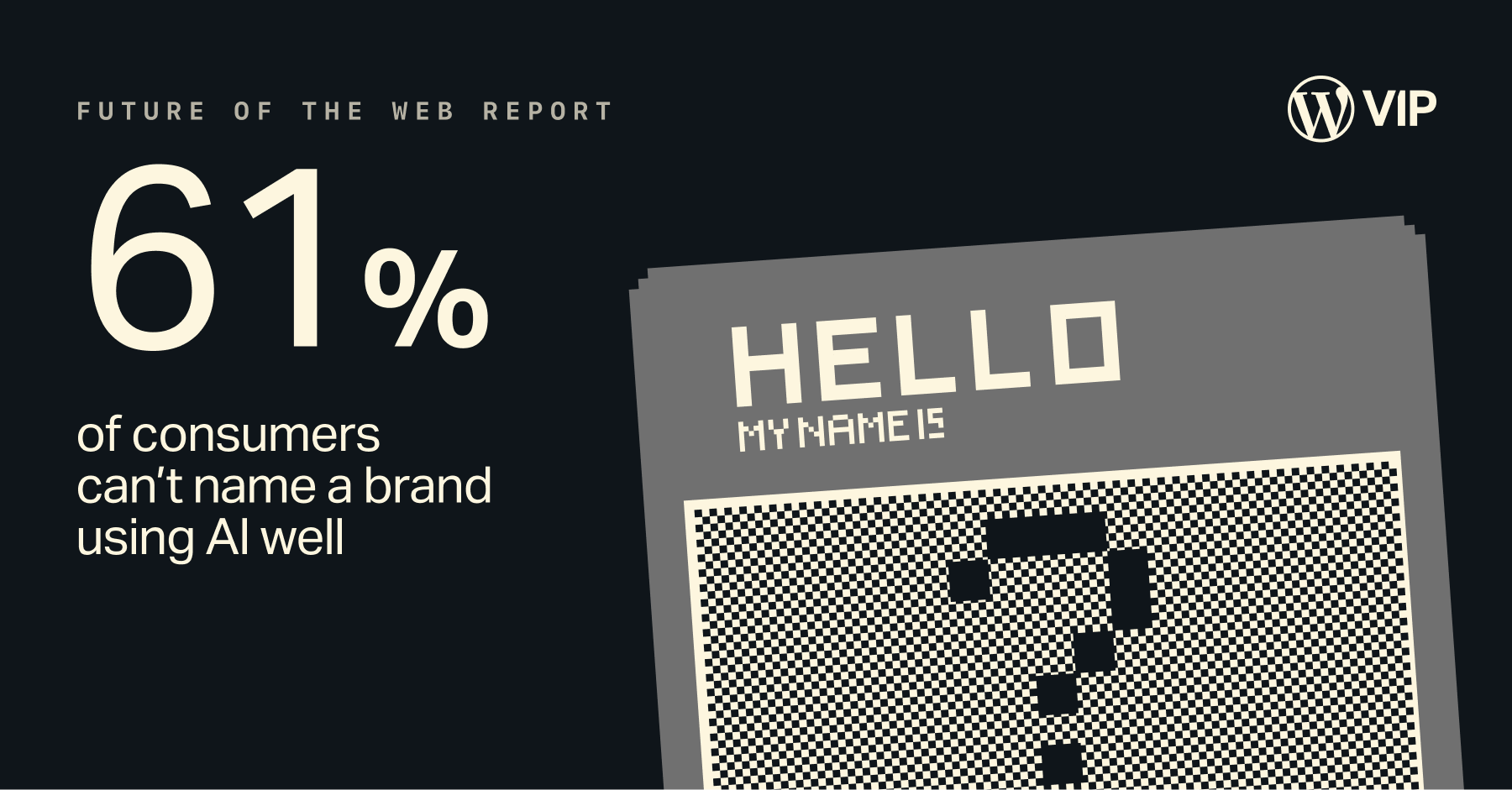
Ask a room full of consumers to name a brand that uses AI well in its messaging, and most of them go quiet. In WordPress VIP’s Future of the Web 2026 report, 61% couldn’t name one. Another 16% said no brand is doing it well at all.
That gap is the opportunity, and right now no one owns it. AI brand visibility has no incumbent, no category leader, no template anyone is copying. For agencies, that’s a rare moment: your clients aren’t trailing a competitor who has it figured out, because no competitor has figured it out yet.
The report makes a bigger point clear, too. The website is turning into the one place a brand gets found by AI and earns trust from the people who click through, and it’s the only channel the brand actually owns. That’s the work agencies are built for. Here’s how to claim it first.
Being early is the advantage
When a category has a clear leader, competing means catching up: benchmark them, close the gap, charge for the gap. AI brand visibility has no leader. No one is ahead yet, so the client who starts now starts in front.
The agency that helps a client define what “good” looks like first turns that client into the reference point competitors have to position against. Once a client owns that position, competitors have a hard time taking it back, and the window to claim it won’t stay open long.
Getting found and earning trust is one job
The report is clear that optimizing for AI and writing for people aren’t opposing goals. AI engines need structured content they can find and cite. The person who clicks through from an AI summary needs a reason to stay. It’s one website on one foundation, doing two jobs at once.
Many clients have split those jobs across two teams or two vendors: one chasing citations, the other guarding brand voice, with no one owning the handoff. The report shows what closing that gap looks like. Pew Research Center worked with a WordPress VIP engineer to build a structured-content layer that let ChatGPT cite its research accurately, and went from invisible to Pew’s number-two referrer in 30 days with its editorial integrity intact. Sell visibility and trust as one engagement, and you’re fixing a problem most clients haven’t named yet.
Consumers across every generation want an open web
Here’s the finding most likely to reshape an agency pitch: 80% of consumers say it matters that information online stays openly accessible and isn’t controlled by a few large organizations. That holds across every generation, from Gen Z to Boomers. Cross-generational agreement on anything is rare, and this is a clear majority in every age bracket.
That’s the WordPress argument, almost word for word. Agencies in this ecosystem already build on open standards, open source, and infrastructure clients own. rtCamp made exactly this shift when it moved from selling a platform to selling solutions and ownership, a story we covered in From WordPress agency to enterprise partner. Yet client budgets still lean toward rented platforms: in the report, only 17% of enterprises name their owned website as a top investment priority for next year, behind both social platforms and AI search. Agencies can make the case that owned, open infrastructure is risk management, not a step backward. Reach that lives on someone else’s platform is a concentration risk, much as data-privacy exposure was a few years ago.
Governance and craft are what clients pay for
Two more findings point at durable, billable work. The first: 85% of enterprise leaders say publishing unreviewed AI content erodes brand trust, which turns “human in the loop” from a talking point into an RFP requirement, enforced in the platform itself rather than a separate compliance tool. Agencies that can architect governed AI workflows are selling defensibility to legal and procurement teams, not just websites.
The second: the experiences that earn a return visit are the ones an AI summary structurally can’t deliver. A poll a reader votes in, a chart that responds to a click, content that reshuffles around what someone is reading. Speed and freshness keep a site discoverable; interactivity and a human tone bring people back. Agencies build both, and can price them as the differentiators they are.
What to do this quarter
The opening is real, but it rewards the agencies that move while it’s still open. A few starting points:
- Audit client content for citation-readiness. Schema and clean structure are what AI engines use to decide whether to cite a page.
- Sell visibility and trust as one engagement instead of splitting it across two scopes or two vendors.
- Make governed, human-in-the-loop AI standard in every build. The report says clients will start requiring it in RFPs.
- Own the “head of discoverability” gap. That role barely existed 18 months ago, and many clients won’t staff it internally.
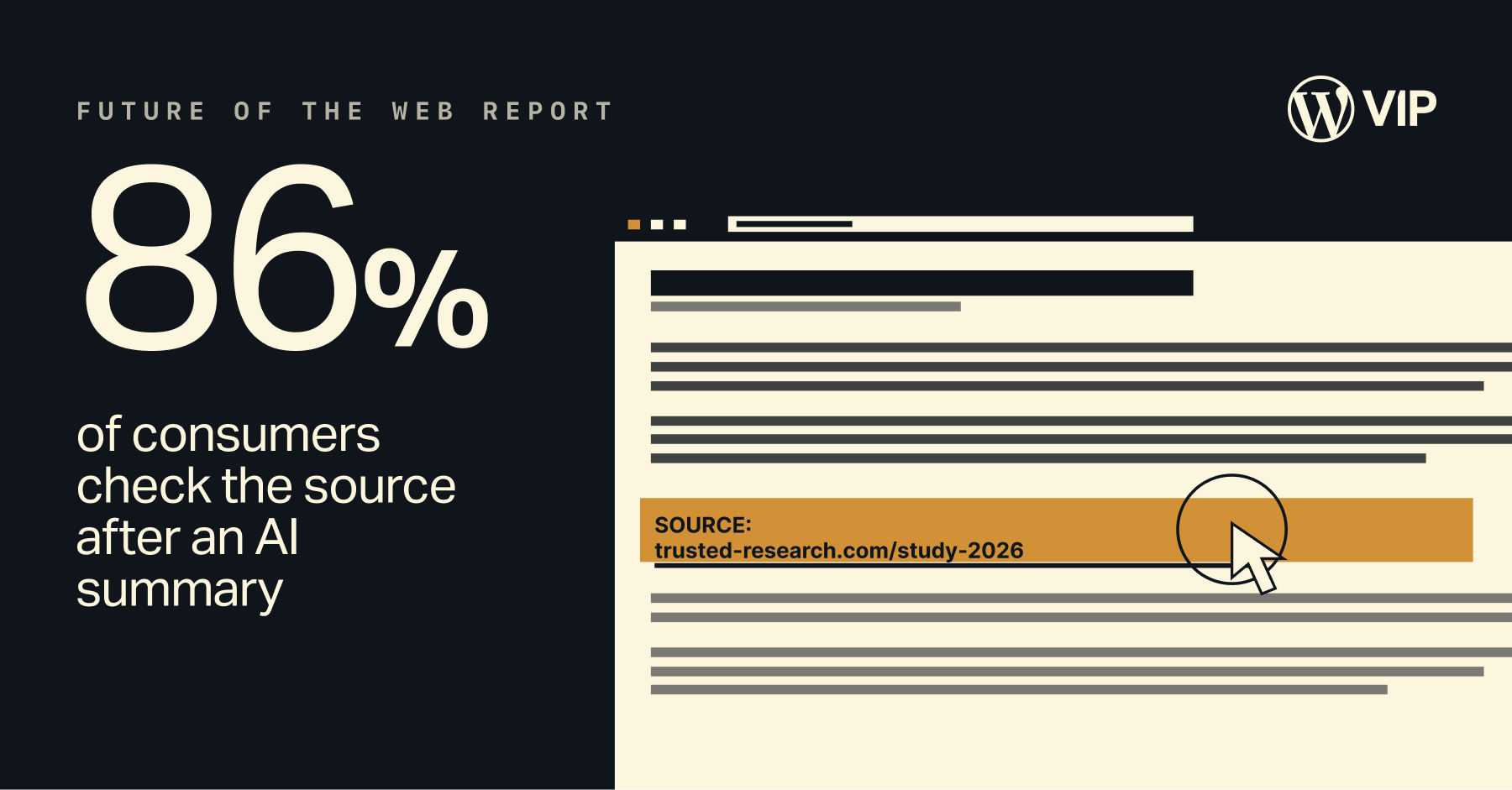
Consumers verify AI answers today because AI is still new. When they stop, the website stops being a place people visit to verify and becomes the place AI itself pulls from to answer. Brands that start after that shift will be a year behind the ones that started in 2026.
Start with the data: read WordPress VIP’s full Future of the Web 2026 report for the findings behind every point above. Then, if you want the tools, support, and infrastructure to build this work on an open platform clients own, join Automattic for Agencies. It’s free to get started.


