

AI is on every client’s agenda this year, and the platform their store runs on will decide how much they can actually do about it.
A new IDC research study commissioned by WooCommerce makes exactly that point, and it gives agencies a sharp new way to talk with clients about where their commerce stack is headed. The headline number is hard to ignore: 65% of digital leaders say legacy platform rigidity is a top barrier to scaling AI in commerce.

The finding that reframes the platform conversation
That finding changes the question clients should be asking. The study is blunt about why: AI moves weekly, while most SaaS roadmaps move quarterly. Closed ecosystems, rigid release cycles, and pricing that penalizes growth add up to a stack that can’t keep pace.
AI will replatform $500 billion in digital spending by 2030
IDC projects AI will replatform $500 billion in digital spending by 2030, and brands that aren’t ready could lose access to a quarter of their market. For your clients, “wait and see” is quietly becoming the expensive option, and that message is easier to hear coming from research than from a pitch.
A credible, third-party case to put in front of clients
The study is authored by IDC Senior Research Director Heather Hershey, who leads the firm’s coverage of AI-enabled digital commerce. When you’re advising a client weighing a platform move, an independent analyst’s perspective carries weight that vendor marketing can’t.
The study lays out the four trends reshaping AI-first commerce, the six structural limits of traditional SaaS models, and four clear recommendations for commerce leaders. You can hand it to a skeptical stakeholder, walk a client’s leadership team through it, or use it to frame a proposal.
Build for both buyers
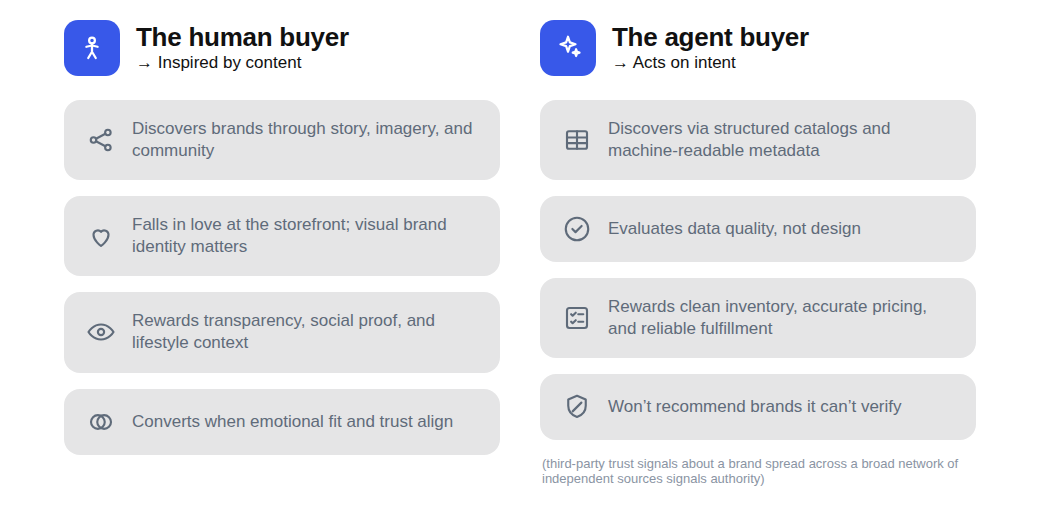
The study points to a second shift agencies can act on right away: your clients now sell to two kinds of buyer. Human shoppers still discover through storytelling, imagery, and community. AI agents work differently, evaluating structured catalogs, machine-readable metadata, accurate pricing, and third-party trust signals. As the study puts it, “get discovered” is the new “get ranked.”
Agents judge a store by its data. They need structured product information, consistent product identity across every channel, and live inventory and pricing before they’ll recommend a client’s products with confidence. It’s work agencies are well placed to own. Agent-readiness looks a lot like a build you already know how to deliver: complete product attributes, clean titles, schema markup a machine can parse, and real-time inventory and price sync. Offering it now, before a client’s competitors do, turns the study’s warning into new business.
Why open platforms are the better long-term bet
The study’s core argument is one agencies building on WordPress and WooCommerce will recognize: open platforms are built for what’s coming. Agents need the freedom to integrate new models as soon as they ship, rather than whenever a vendor’s next release cycle allows.
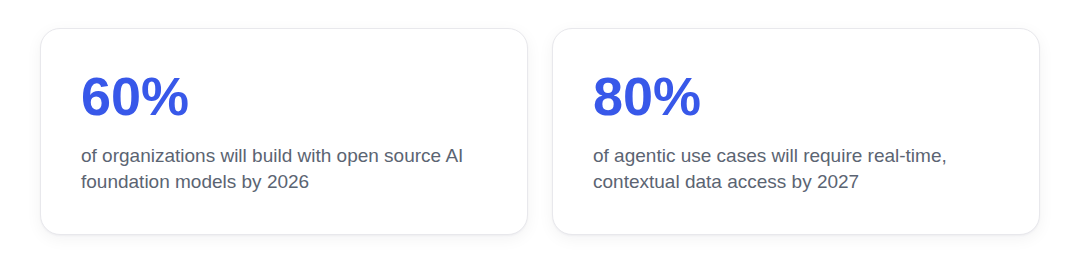
The numbers back the direction. IDC expects 60% of organizations to build with open source AI foundation models by 2026, and 80% of agentic use cases to require real-time, contextual data access by 2027. Large language models are trained on open code and standards, so integrations tend to run more reliably in open environments than closed ones. Open source also means your clients own their stack, their data, and their roadmap, with no premium to reach their own customer data.
WooCommerce is an open platform that powers more than four million stores, and it’s already built for agent-driven commerce: it ships native Model Context Protocol support and is a launch partner for Stripe’s Agentic Commerce Suite.
Bring the data to your next client conversation
The platform decisions your clients make now will shape what they can do with AI for years. This study gives you third-party evidence to help them choose well, and to make the case for open when it’s the right fit.
Read the full study: woocommerce.com/agentic-commerce-trends-2026/


