

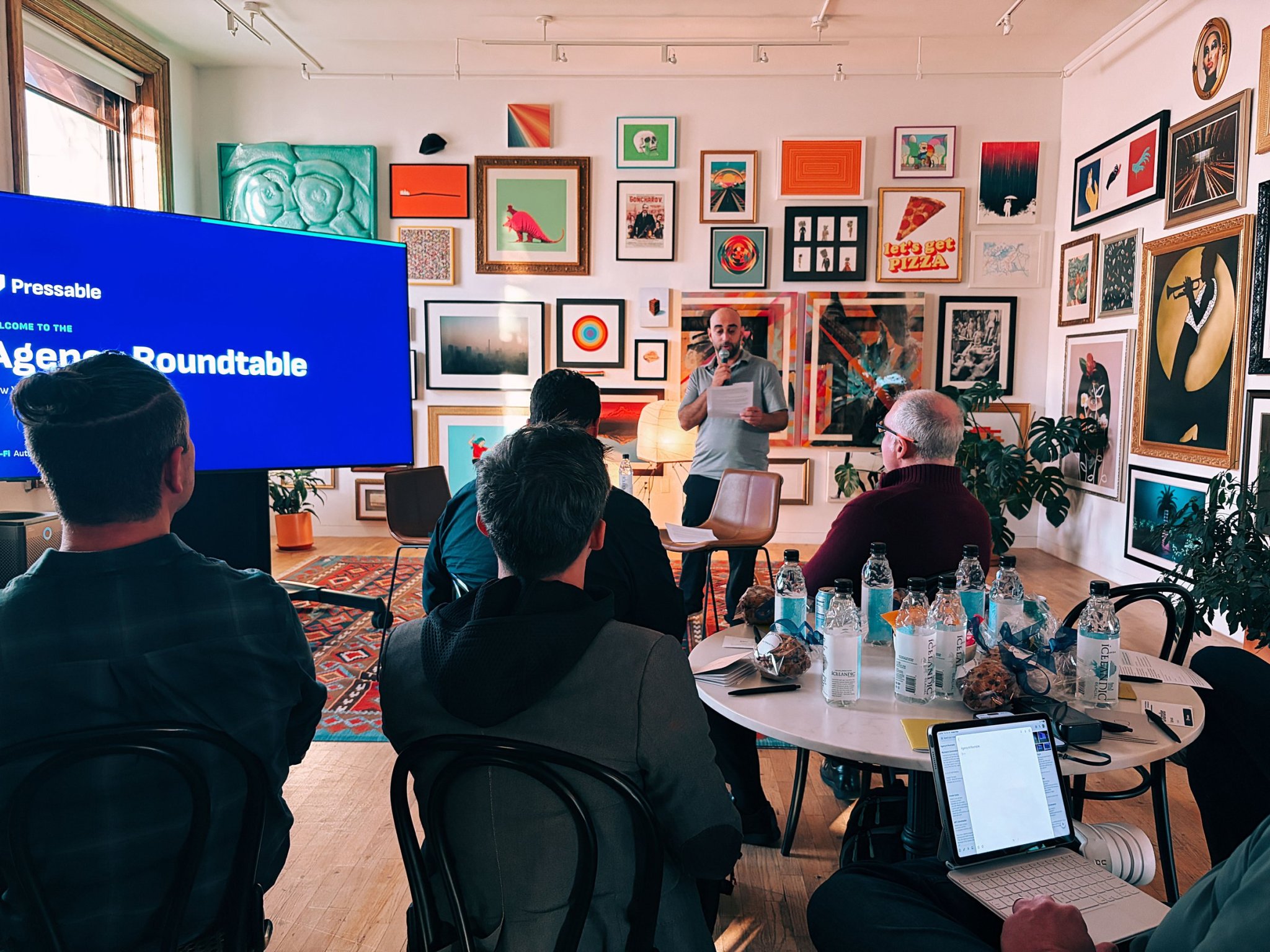
On October 29, Automattic for Agencies and Pressable welcomed agency owners and leaders to our New York office for an evening roundtable. Almost everyone who registered showed up, so every table was full, with most guests coming from around the city and a few making the trip up from Philadelphia. We opened with a short talk and a fireside chat with Andrew from MAXBURST, then gave the rest of the evening over to conversation at small tables.
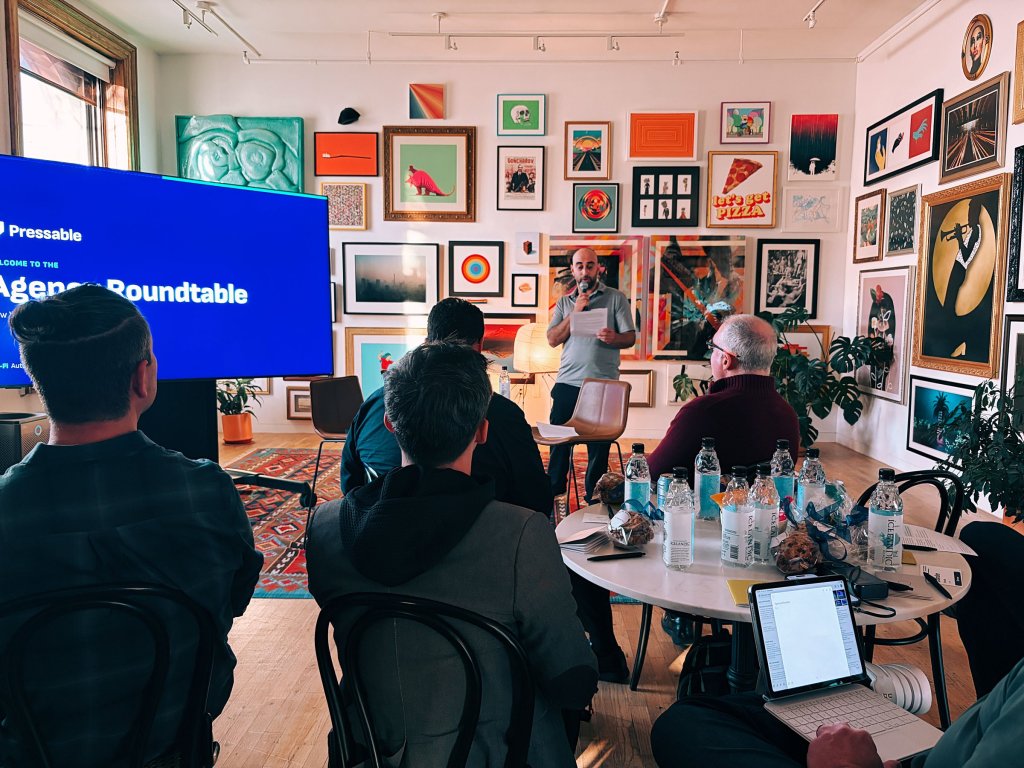
After our roundtable at WordCamp US this summer, agencies told us they wanted more time to talk with each other, so we kept this one small and spent most of the evening on open discussion in small groups. They especially wanted to dig into how AI is playing out in their day-to-day work, including how to price it, how to bring their teams along, and how to keep up with how quickly it’s changing.
The conversations went deeper than we expected, with owners speaking openly about what’s working, what isn’t, and what worries them. We’ve shared the main themes below without names, since part of what made the evening useful was that people felt comfortable thinking out loud.
The five themes at a glance
- Faster delivery is putting pressure on pricing.
- Shorter projects put more pressure on the pipeline.
- Clients are experimenting with AI, and agencies are helping them get it right.
- Bringing teams along is as hard as managing clients.
- Agencies want to learn from each other.
1. Faster delivery is putting pressure on pricing
AI is shrinking delivery timelines, and more than one agency described projects that used to take eight weeks now shipping in two, with a smaller team and their margins intact.
Clients have picked up on this, and some now expect the same work at half the price, while others ask why they should pay the same for something delivered in a fraction of the time. That led to a good back-and-forth about how to price work that takes fewer hours, whether the answer is simply more projects, and whether clients will keep paying for design and development or expect agencies to take on more of the strategy. Nobody landed on a single answer, and hearing the range of approaches was one of the most useful parts of the night.
2. Shorter projects put more pressure on the pipeline
When a project wraps in weeks instead of months, the next one needs to be lined up much sooner, and several owners said the pressure to keep their pipeline full is the highest they’ve felt.
For many in the room, the answer has been to grow the work they do with existing clients. That might mean introducing themselves to other teams inside a client’s organization that don’t know the agency exists, finally working through ideas that have sat in a backlog for years, or connecting the older systems that sit behind a client’s website. Individual projects may be smaller, but the relationships are getting deeper. Some agencies are also building new services around answer engine optimization (AEO) and generative engine optimization (GEO), which help clients show up in AI-generated answers as well as search results, and they’re finding that this work opens up new conversations with clients.
3. Clients are experimenting with AI, and agencies are helping them get it right
Agencies are seeing more AI-generated requirements and client-built prototypes, and more clients checking recommendations against what a chatbot told them. As a result, helping clients understand what they need, and why, has become a bigger part of the relationship.
Several people pointed out that a prototype can help a client show an idea they couldn’t put into words before, which gives the agency a much better starting point for discovery. One agency took a client’s AI-made design, created three more versions grounded in a deeper understanding of the business, and won the project with its own work. Others described tools that clients built for themselves, which worked fine on a laptop but broke once they went live and ended up with an agency to rebuild properly.
Clients are also worried about plugin sprawl and how often security updates now arrive. In response, several agencies are trimming sites down to the plugins they need and moving away from page builders in favor of core blocks and custom patterns.
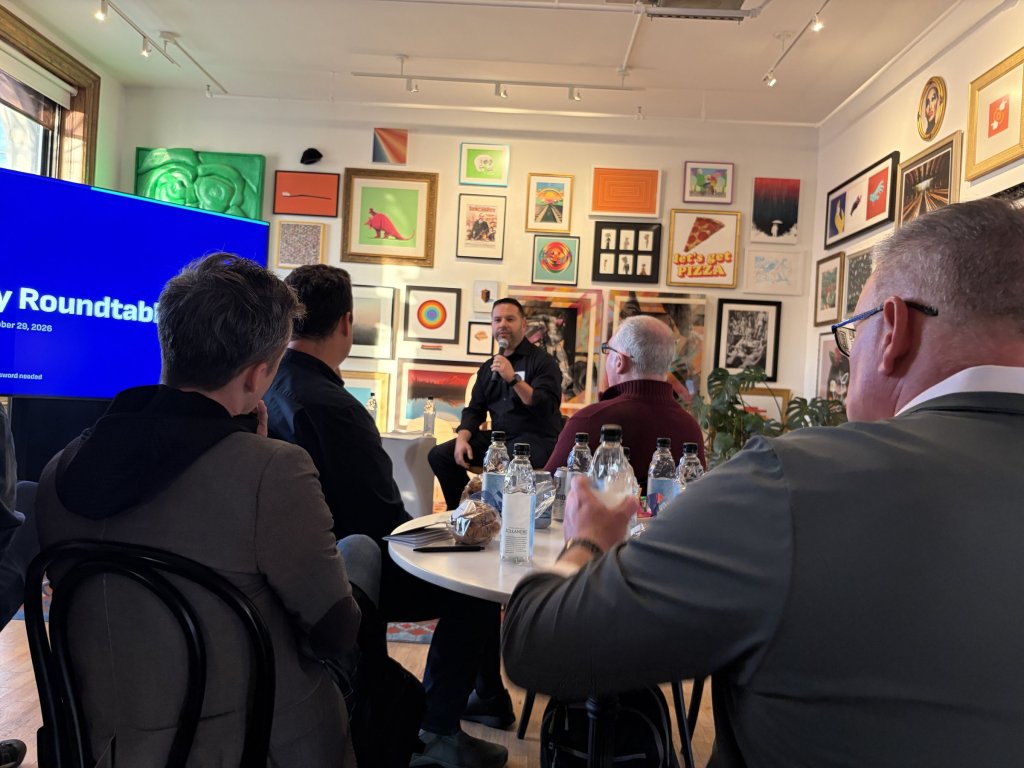
4. Bringing teams along is as hard as managing clients
At one table, the conversation turned quickly to staff who worry AI will take their jobs, which many owners are dealing with right now. For some, that’s been harder to handle than anything happening with clients.
One owner said pushing adoption from the top hadn’t gotten very far, but things changed once two engineers started getting good results and showing their coworkers how they did it. Others had similar experiences with hands-on demos, and the agencies further along offered practical ideas to the ones still getting started.
5. Agencies want to learn from each other
Despite the pressure, the mood in the room was more hopeful than you might expect. Several people argued that as AI makes more of the web look the same, brands will need agencies to help them stand out again.
The agencies doing well are changing how they create value, putting more into strategy, new services, and closer client relationships, though no one claimed to have it all worked out. Many said they rarely get to sit down with people running similar businesses, and they got as much out of comparing notes on managing their teams as on managing their clients.
What’s next
Since the event, many guests have stayed in touch with the people they met at their table, and we’ve loved seeing those conversations carry on.
If you’d like to host an agency roundtable of your own, reach out to your partner manager.
Thanks to Kyle Runner, Shane Tabrizi, and Andrew Merino for hosting tables and sharing what they heard.


