

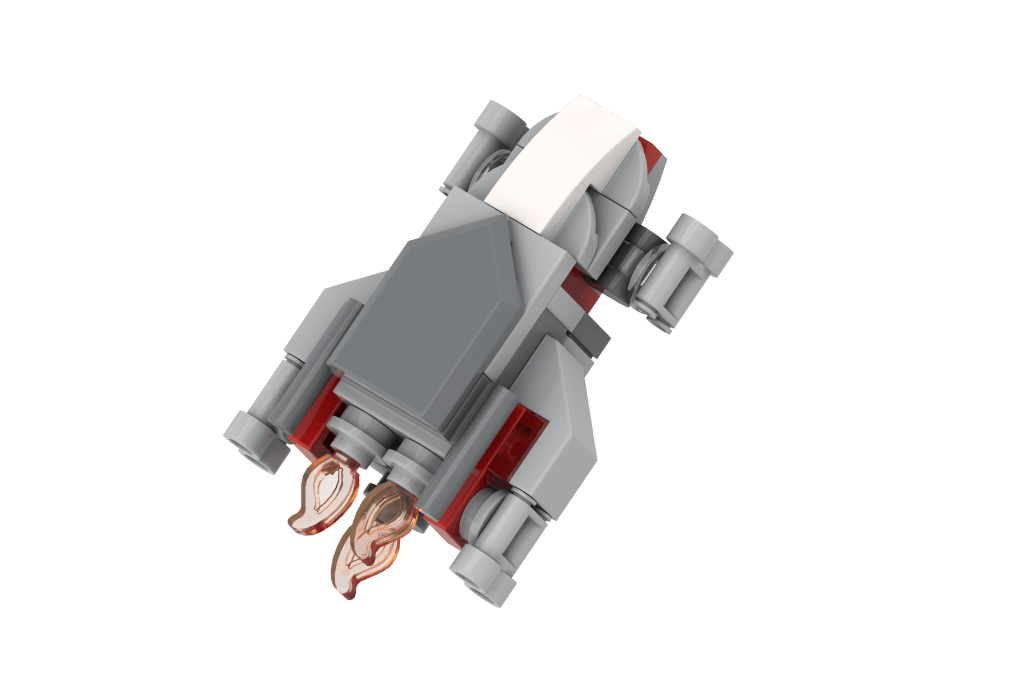
Zach Spears, a Happiness Engineer at Automattic, used our recent Radical Speed Month initiative to finish and ship a project years in the making: Brickomattic, a collection of LEGO® kits that create hangable versions of logos from all of Automattic’s products. Below is Zach’s story of how the project came to be.
This month marks my five-year anniversary at Automattic. As I look ahead to my sabattical with excitement, I can’t help but also look back on my tenure and the incredible things I have been a part of. In a similar fashion, Automattic the organization seems to find itself at a crossroads. We celebrated our 20th anniversary last year, and what it means to be Automattic is changing. We can see these exciting changes with recent acquisitions like Beeper, and changes to how we grow our existing businesses like Automattic for Agencies. As with any remarkable milestone, this is all worth noting and celebrating.
From a young age, I’ve always enjoyed the art of gift-giving; I find that it gives me a way to express my appreciation when words may not come so easily. Over the last five years, I’ve had the opportunity to be part of five different teams at Automattic that touch nearly every part of the business, and to work with incredible colleagues from across the world. Before long, my gratitude for my coworkers combined with my lifelong love of creativity and LEGO® bricks, and I decided to put together some microbuilds.
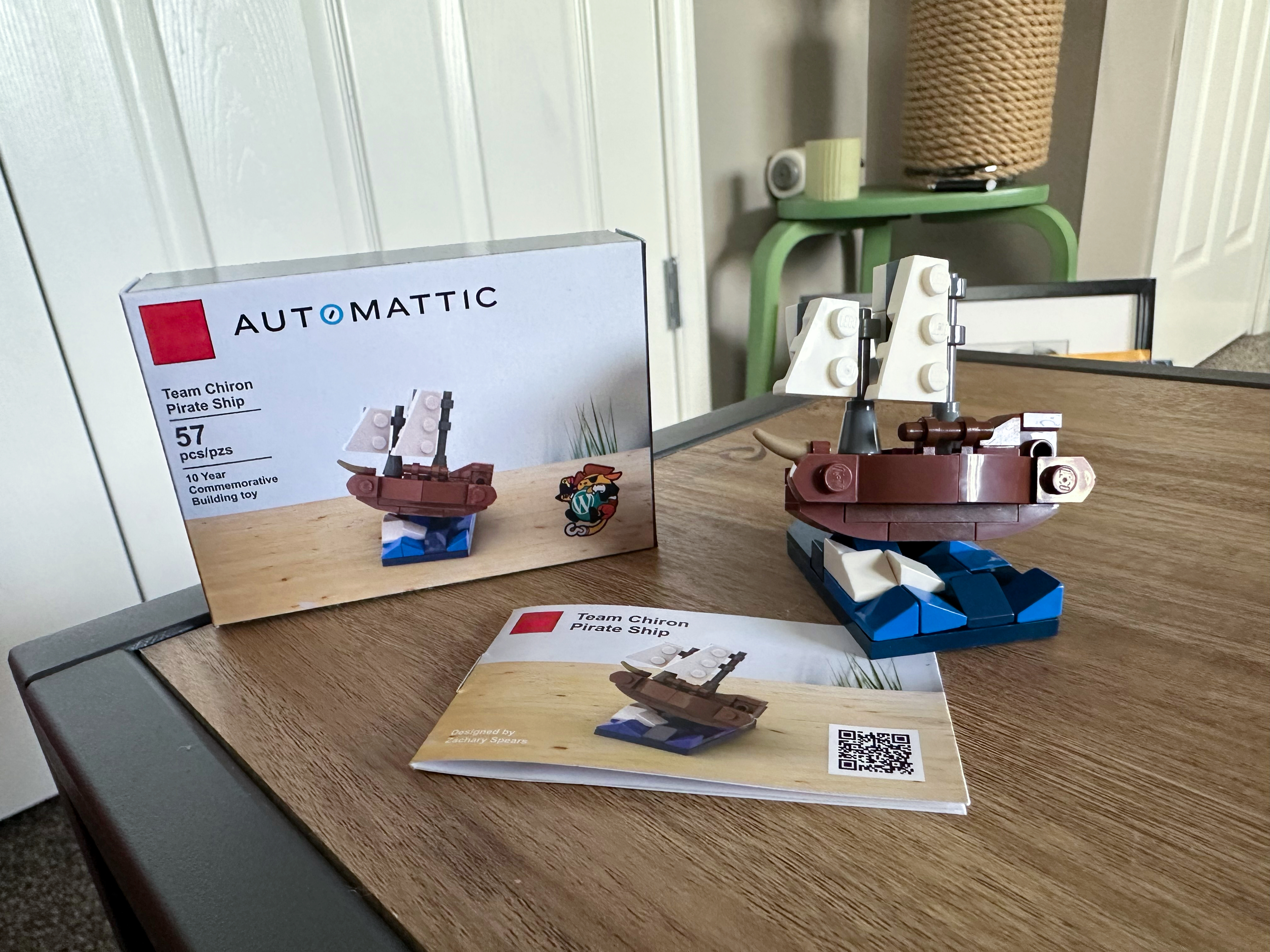
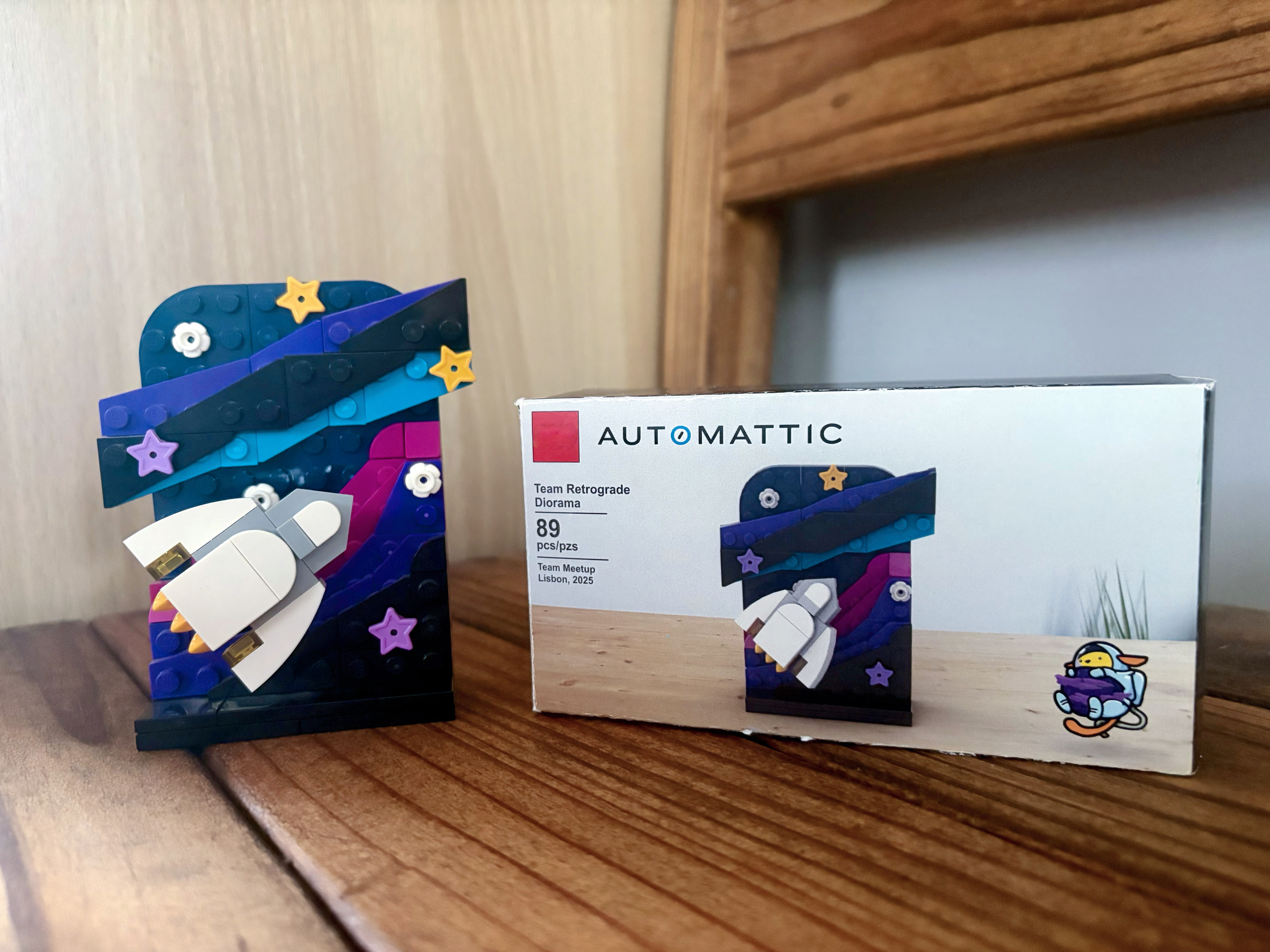
For my team meetup one year, I used BrickLink’s Studio software to design and organize mini LEGO® rocket kits for my team, which was known as Jupiter. The next year, on a team where we referred to ourselves as pirates. I constructed a small movable pirate ship, complete with custom packaging and instructions. A year later, for a team called Retrograde, I created a small diorama that featured a spaceship against a celestial backdrop.
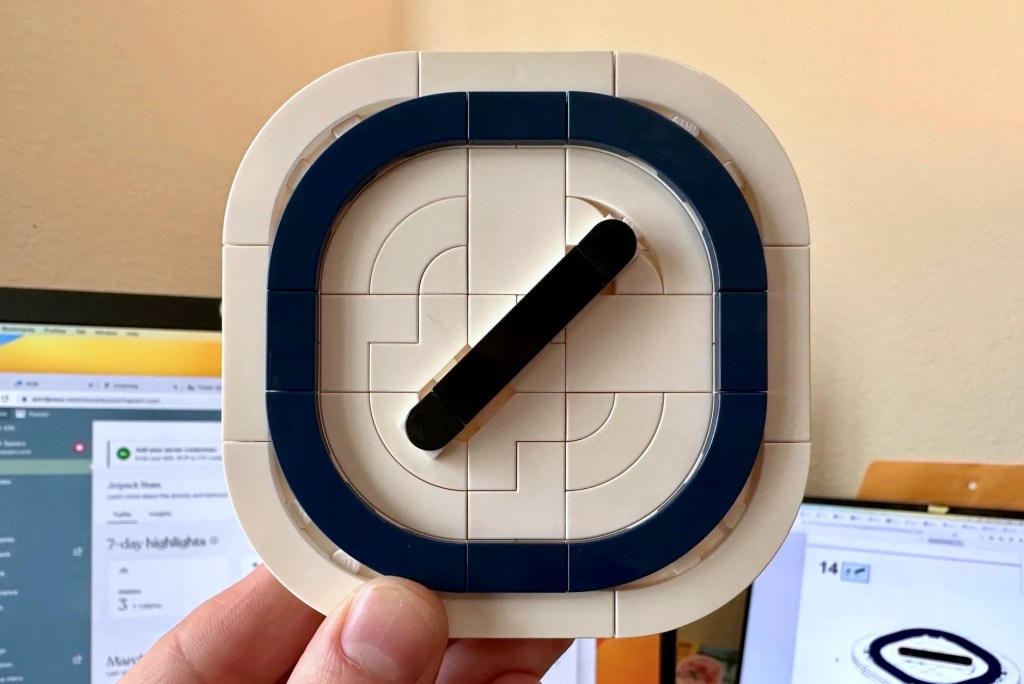
In addition to the team-specific sets, I wanted to build something more generic for the whole of the company. To do so, I challenged myself to recreate Automattic’s logo in brick form, which I’d never done before. I was really happy with my first design which was intended to sit flat on a desk, and I later adapted it with parts from LEGO® art sets to become suitable for wall hanging. After I shared the design internally, Matt Mullenweg asked if I could build some for the Automattic offices. If you ever find yourself at our offices in San Francisco or New York City, keep an eye out for the logo built from LEGO® pieces!
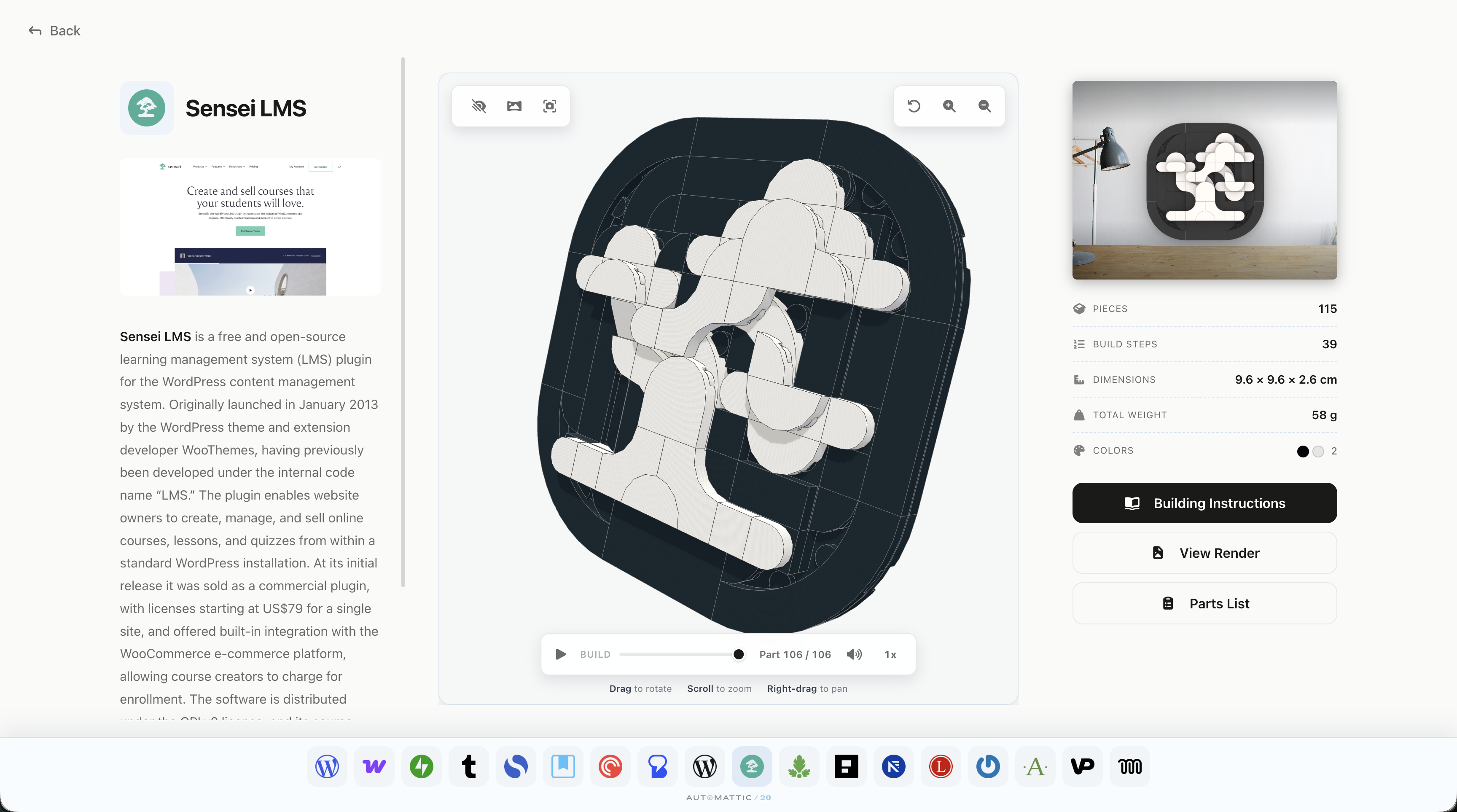
Once I sent out the finished designs to our offices, I began crafting a series of wall hanging designs for Automattic’s primary products and business units, a process that took several months of slow (but invigorating) iteration and design. Some of the designs came together seamlessly like Day One, and some proved more complicated such as Sensei LMS. The most difficult to figure out was the Woo logo, which is a division I currently work in. I first tried a more minimalist cart design, but eventually came up with a technique to capture the bendy Woo “W.”


Nearly all of the final 20 designs are the same height and width and centered around the LEGO® wall hook-compatible part. This means that they can be displayed as wall art just like the official LEGO® Art sets. I’m proud of how the designs came together, and my personal favorite is the Sensei LMS design, which features the silhouette of a Bonsai tree.
Launching Brickomattic
As the 20 final designs were finally coming together, I needed a way to share to share them with my colleagues that felt more like an art gallery than a blog post. I also wanted the kits to feel three-dimensional the way a physical set would, and to experience the joy of the kit coming together, as it would in a LEGO® video game.
And so: Brickomattic.
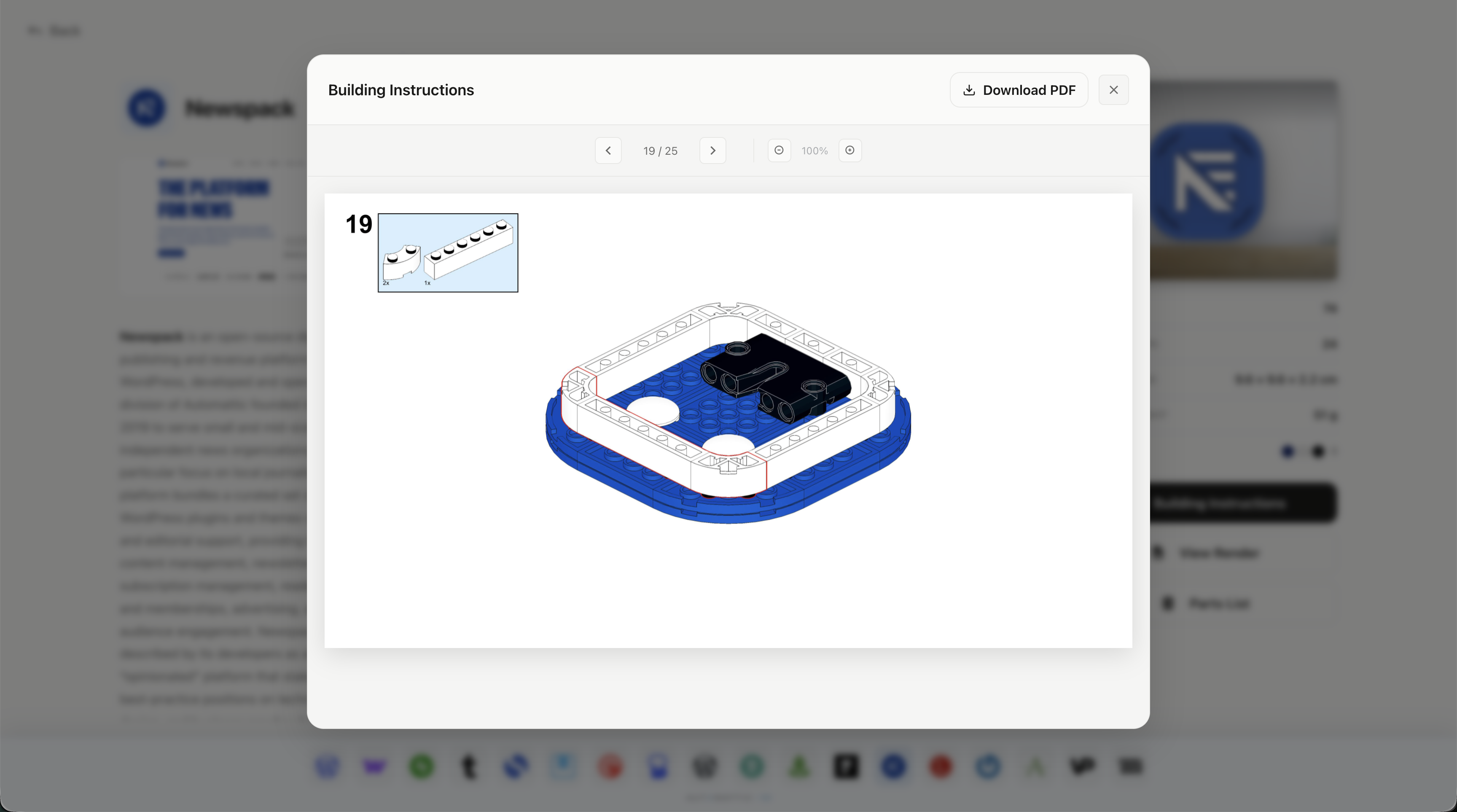
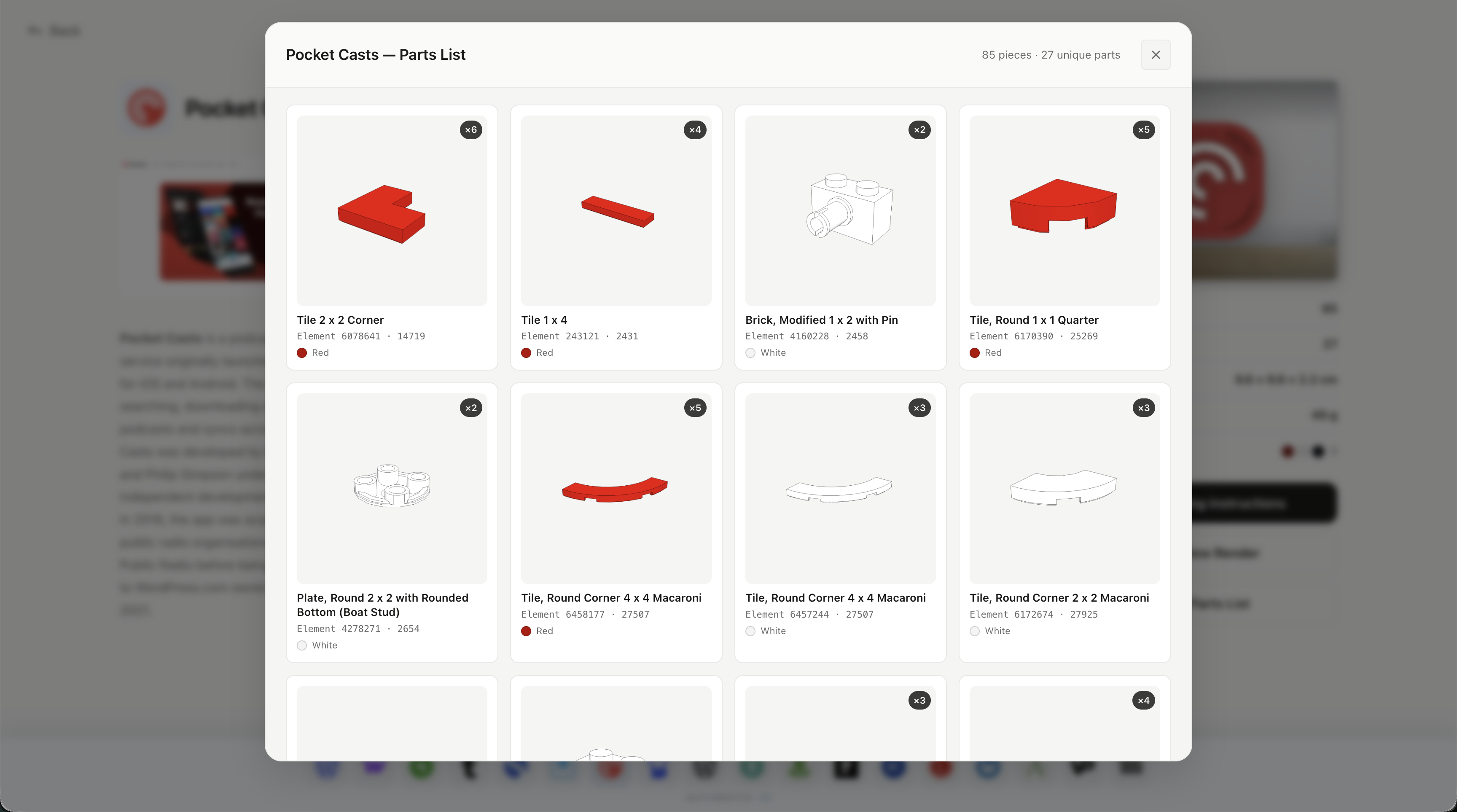
I launched a WordPress.com site, grabbed the domain brickomattic.com, and began building. With assistance from generative coding tools, I was able to implement a fully featured and inviting gallery complete with self-constructing 3D models and an x-ray button. I also designed and exported building instructions and high-resolution renders of the designs. The site uses a library of parts from LDraw and LDR export files from the Studio software to build the immersive gallery. I’m currently working on adapting this plugin into an open-source WooCommerce plugin for MOC (“My Own Creation,” a term for custom-designed models) sellers in the broader AFOL (Adult Fans of LEGO®) community.
Why LEGO®?
At Automattic we like to say that code is poetry. This looks great on a T-shirt, but it’s also an expression of a broader philosophy. We approach what we create as a business with thought and intention. From that standpoint, it’s not much of a stretch to draw a line to the LEGO® artform; both take small parts and combine them to create something worth being proud of.
It’s also fair to point out that I’m a lifelong LEGO® fan, and this was something that I did for myself. I love creating, and I love sharing the things that I create with others. Brickomattic is as much an act of play as it is a gift to my coworkers. It forced me to step outside of my comfort zone and build things I didn’t think I was capable of.
Finally, I have a strong belief in the value of the tangible. As a business that builds software, and that works distributed, we can sometimes feel disconnected from our work. This is why meetups and team swag are important to our culture: They foster a feeling of belonging. Creating a physical representation of the software you work on every day is an important physical reminder of the things you build and the impact that they (and you) can have.

