


Building strong relationships with clients is a key part of long-term success for an agency. And while delivering top-tier results is important, creating trust, encouraging open communication, and making sure everyone is on the same page matters a great deal, too.
So how can you improve client relationships so that everyone benefits? By using the right tools and approaches.
In this guide, we’ll cover 14 key steps to strengthen partnerships for long-term success. We’ll also introduce a program that includes a range of features to help agencies manage client relationships effectively. Let’s begin!
The ultimate tool for WordPress agencies: Automattic for Agencies makes it easier than ever to offer premium WordPress hosting, plugins, and services while simplifying workflows. Processing invoices is streamlined thanks to the Build-a-Cart Referrals feature, which lets developers and agencies earn commissions by using and recommending top-tier tools. And site management is handled all from one central dashboard. Discover how Automattic for Agencies can transform agency operations and grow your business. Learn more.
Why is building a strong relationship important?
Building a strong client-agency relationship matters for several reasons, all of which have a direct impact on both short-term project success and long-term business growth.
Here’s a breakdown of why it’s so important:
It impacts project success
Building a relationship based on trust and open communication is key to successful project management. When both the agency and client are aligned on goals, timelines, and expectations, it minimizes the chance of misunderstandings and helps prevent small issues from snowballing into major problems.
Clear communication also allows agencies to address challenges as they come up. This way, projects stay on track and meet the client’s needs without unnecessary hiccups, helping everyone avoid the dreaded “scope creep.”
It improves client retention
Maintaining strong client relationships goes beyond just completing a project according to predetermined specifications. That’s a key part of it, but actually nurturing that relationship is what leads to long-term loyalty. Satisfied clients are more likely to return for future work and refer new clients to an agency. Consistently delivering value, reliability, and trust makes it less likely that clients will seek out other agencies to work with.
A high client retention rate also saves agencies time and resources, reducing the need to constantly seek out new business. And since acquiring a new client is five times more expensive than retaining an existing one, it’s beneficial to prioritize retention across the board.
It leads to mutual growth
A strong partnership allows for mutual growth. As agencies help clients achieve their goals, clients often expand their scope of work, leading to more projects and opportunities for the agency. Building a reputation as a trusted advisor also positions the agency to contribute strategically to the client’s business decisions.
Notably, the opposite is true when agencies don’t show up to actively strategize. In the advertising world, for instance, a lack of strategy is responsible for 38% of clients leaving the agencies they use.
It causes better problem-solving and conflict resolution
Inevitably, challenges will arise in any client-agency contract. Agencies that invest in their relationships are better equipped to handle conflicts constructively. Open communication, active listening, and empathy during conflicts help both parties work through issues without blame, leading to more effective solutions.
This collaborative approach strengthens the relationship and fosters a sense of partnership.
The four pillars of a strong client-agency relationship
Establishing a successful client-agency relationship relies on building a solid foundation rooted in trust, clear communication, transparency, and mutual respect. These elements help projects run more smoothly and aid in developing long-term partnerships that drive growth and success for both the agency and the client.
But how is this manifested on a practical level? Let’s take a look.
Trust
Trust isn’t built overnight. It results from consistent actions that demonstrate reliability and expertise. Clients need to feel confident that an agency understands their business, shares their vision, and can deliver results. This means that agencies should consistently meet deadlines, provide quality work, and handle challenges without over-promising.
Building trust also means allowing for some flexibility. Clients should trust the agency’s ability to innovate and offer guidance. And agencies should trust the client to provide necessary insights into how their business operates.
A breakdown in trust, even on a small scale, can erode the entire relationship.
Communication
Effective communication means more than just sending regular updates. It also means communicating clearly across every stage of a project. Agencies need to set clear expectations from the beginning, agree on goals, and establish who the primary points of contact will be. Both sides should feel comfortable bringing up concerns or asking questions as the project progresses.
If the agency is using project management software, or any other type of third-party tool, they should make sure that the client fully understands how to use it and where they can access important information. For example, you might want to put together a document that outlines where they should add their website content, how they can review website drafts, and how they can submit feedback.
Transparency
Transparency goes hand-in-hand with communication, but has more to do with the operational aspects of the relationship. Agencies need to be upfront about everything from timelines and potential setbacks to pricing and deliverables. If there’s a delay, or if something unexpected arises that could affect the project, the client should be notified as soon as possible.
On the client side, being transparent about expectations, budget constraints, and internal challenges can help the agency adjust and provide better service. A lack of transparency often leads to mistrust and frustration on both sides.
Mutual respect
Lastly, mutual respect ensures that the agency and client value each other’s input, expertise, and role in the relationship. Agencies must respect the client’s understanding of their own business and market, while clients should trust the agency’s knowledge in areas like creative strategy, digital marketing, or web development.
Respect also extends to how feedback is given and received. Constructive feedback should be clear and actionable, and agencies should approach revisions with professionalism, even when critiques are tough. When both parties feel valued and respected, the collaboration becomes more productive and fulfilling.
How to build a robust client-agency relationship in 14 steps
We’ve covered the “why” pretty extensively so far, but what does it look like to build a solid client-agency relationship?
What follows are 14 steps for ensuring that clients and agencies build strong relationships for the long haul, so that both parties stay engaged, meet expectations, and continue growing together.
1. Make a strong first impression
The initial interaction sets the tone for the entire relationship. Beyond just being professional, it’s vital for an agency to do their homework. Before ever meeting with a client, research their industry, competitors, and current challenges. A tool like Semrush could be useful for this, as it shows how a given website is performing against competitors’, what’s trending, and so forth.

Come prepared with specifics in hand that speak to their business objectives. It always comes across better if an agency has done its research, as opposed to coming into that first meeting cold. A proactive approach will be received well and will demonstrate your intentions to deliver real value.
At this stage, make sure to communicate how the process will unfold. Clients need clarity about who their points of contact are and what to expect. Laying this foundation early helps to avoid confusion later. This all starts with a strong onboarding process. [link to onboarding article]
2. Ask the right questions to understand client needs
The discovery phase is critical for digging into the nuances of the client’s business — don’t skip this part! Go beyond surface-level questions. Ask about their long-term goals, target audience, brand voice, and previous agency experiences. Understanding what worked (or didn’t) with past agencies can provide invaluable insights into how to better serve this client.
Ask about their biggest pain points, too. Knowing where they’re struggling helps you create a more customized approach and deliver more personalized solutions.
And remember to stop talking and really listen to what they have to say! This isn’t the time to make assumptions or start explaining what you think they need. By being quiet and letting them explain, you can gain valuable insights you wouldn’t have otherwise.
3. Showcase your agency’s capabilities
Once you’ve gathered enough insight into the client’s needs, it’s time to showcase your agency’s expertise. Instead of a generic pitch, customize your presentation to demonstrate how your solutions solve their specific challenges. Use relevant case studies and examples that align with the client’s industry or objectives.
And don’t be afraid to explicitly call out your skills and strengths. You can directly mention a problem the client is having, and list out exactly how your agency can uniquely address that issue.
It’s also essential to be transparent about your process. Walk the client through how you work. Highlight the tools you use and how everything is structured so they’ll know exactly what to expect.
4. Set clear expectations on scope, deliverables, and timelines
Setting and managing expectations makes for a successful project. So, be specific about what’s included in the scope, what the deliverables will look like, and when milestones will be completed. If the client has ambitious goals, break them down into manageable phases so they can see progress along the way.
And make sure that everyone working on the project internally understands the agreed-upon expectations. If everyone on the team understands what’s going on, miscommunications will be less likely. A project management tool like Trello or Asana can come in handy here. That way everyone involved, from agency team members to clients, knows exactly what to expect (and when).
You might, for example, create Trello cards for each part of the project — every page, piece of functionality, or migration task — and assign those cards to every individual involved, along with due dates. You can then add sub-tasks, communicate back and forth about deliverables, and link Google Drive folders with media assets.
This will look dramatically different, of course, depending on your specific business, the tools you use, and the project requirements.
5. Be upfront about what is possible and what isn’t
Honesty upfront can prevent major problems later. If a client asks for something that isn’t realistic — due to time, budget, or technical constraints — it’s better to have a difficult conversation now than to risk under-delivering later.
Set clear boundaries on what’s feasible and back these discussions with data, like your team’s historical performance on similar projects.
Explaining your limitations doesn’t have to be a negative. Instead, frame it as part of your expertise. Then, offer alternative solutions that better align with what’s achievable. For example, you might recommend a freelancer or contractor you’re familiar with that can provide that aspect of the project alongside your team.
6. Commit to consistently delivering high-quality work
Delivering top-tier work isn’t just about meeting deadlines. It also means exceeding expectations in terms of performance and quality. To achieve this, your agency must have internal processes for quality control at every step.
Here are a few ways you can account for this:
- Regular peer reviews
- Client feedback cycles
- Rigorous testing
It’s critical to build checks and balances into a workflow to catch issues before they become bigger problems. You don’t want to identify problems with a page template, for example, after it’s already been applied to 12 internal pages.
7. Establish regular updates and feedback loops
Consistent communication, as we’ve already established, is one of the key pillars of a strong client-agency relationship. With this in mind, set a regular schedule for updates, whether through weekly meetings on Slack, progress reports, or email check-ins. This helps both client and agencies stay aligned, avoid surprises, and quickly address any changes in scope or direction.
Make it easy for clients to provide feedback and act on it, too. You can create quick surveys with Typeform or Google Forms that can assist with this for more formal feedback-gathering. But regardless of the tool you use, make sure you have a system in place for gathering feedback and applying it to your work.
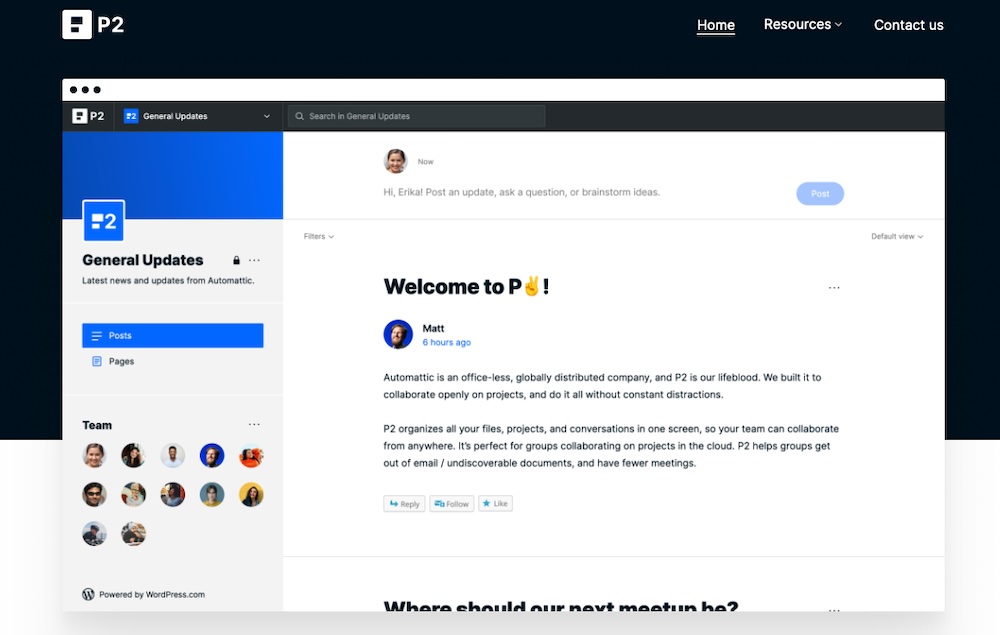
P2 is a great option for this kind of asynchronous communication. It allows teams to share updates, documents, and progress reports in an organized, easily-accessible space. Clients can leave comments and feedback directly on posts, which ensures that their input is gathered and addressed promptly.
When clients feel heard and see that their input is being incorporated, it builds trust much more quickly.
8. Always meet deadlines
Meeting deadlines is one of the simplest ways to build trust. When a project is delayed, it disrupts the client’s entire business. To keep things on track, build in buffers and be realistic about timelines. Overpromising and under-delivering is the quickest way to erode trust.
If delays are unavoidable, inform the client early and explain what measures are being taken to get things back on track. Transparency during setbacks can actually strengthen the relationship if managed well.
Also make sure that you let the client know what you need from them to meet each milestone or deliverable. They shouldn’t find out that you’re missing images for a page the day before a draft is due. Instead, be upfront about the assets you need on their end, and get them at the start of the project, if possible.
9. Create a sense of partnership and shared ownership
Clients aren’t just looking for a vendor — they want a partner. With this in mind, involve them in strategic decisions, ask for their input during key phases, and make them feel part of the process. This sense of shared ownership deepens the client-agency relationship and helps net better outcomes. After all, if both parties are invested in the success of the project, it’s much more likely to actually be successful.
10. Show genuine interest in the client’s business
Clients can tell when an agency is just going through the motions. To build a long-term relationship, show genuine interest in their business. Stay updated on industry trends and understand how external factors like new competitors could impact their strategy.
Go beyond the immediate project and think about the client’s broader business goals, too. When an agency or web developer thinks about a client’s long-term success, a strategic partnership is formed, rather than a typical vendor-client relationship.
And the little things matter here, too. Is the client holding a grand opening or other type of event? You may want to attend. Have they reached an important business milestone? Send a gift basket or congratulatory note.
11. Be flexible and adaptable to changing client needs
Client needs evolve, often due to market conditions, internal changes, or new opportunities. An agency can show its value by being flexible and willing to adapt its approach. This doesn’t mean giving in to every request. But sometimes it is about helping clients prioritize or phase projects in a way that makes the most sense.
Agencies that demonstrate adaptability are more likely to build lasting relationships, as clients will see them as partners that can grow with their needs.
12. Build personal connections with key team members
Developing personal relationships with a client’s team is just as important as the professional connection. This ensures smoother communication and helps you navigate challenges when they arise.
Understanding the personalities and preferences of decision-makers allows you to communicate in a way that resonates directly with that team member. Does one person prefer to chat on the phone? Does another hate video calls? How often do they want to touch base?
Don’t be afraid to take things a step further, too. Send a birthday card or email. Ask about their kids or their latest vacation. Celebrate their favorite soccer team’s recent win. Little touches really do go a long way.
13. Measure and show return on investment (ROI)
Clients need to see the value an agency brings before deciding to stick with them for the long-haul. And don’t expect them to understand your value automatically! Show them how you’ve helped their business, and admit any areas where improvement is needed.
This starts with setting measurable KPIs and regularly reporting on how your work is impacting the client’s business. ROI isn’t just about the final deliverable, though. It’s also good to show how every stage of the process is moving the client closer to their goals.
If possible, use metrics and analytics tools to quantify success. Clients appreciate when results are tangible, through increased website traffic, higher conversion rates, or more leads generated.
14. Celebrate success and milestones
Recognizing success is an important but often overlooked step in the client-agency relationship. Whether it’s a successful campaign launch or reaching a key milestone, celebrating these achievements further helps build a positive and collaborative atmosphere.
It doesn’t have to be over-the-top. Something as simple as a shoutout in a meeting or a thank-you note can go a long way towards strengthening the relationship.
How Automattic for Agencies helps enhance client-agency success
To help agencies grow and manage client relationships more effectively, Automattic for Agencies provides centralized management of the most powerful WordPress tools while simplifying billing and bolstering agency revenue.
What is Automattic for Agencies?
Automattic for Agencies is a comprehensive partnership program designed to help agencies streamline their processes, improve client offerings, and increase revenue.

As part of the Automattic ecosystem — which includes WordPress.com, WooCommerce, Jetpack, and Pressable — this program offers tools and resources specifically crafted for agencies managing multiple client websites.
After joining, agencies gain access to specialized pricing, exclusive referral earnings, centralized management tools, and premium support.
Learn more about Automattic for Agencies here.
What are the benefits of joining the Automattic for Agencies program?
Organizations that join Automattic for Agencies can benefit from:
- Exclusive pricing and discounts: Agencies receive discounts on Automattic products, including Pressable hosting, WooCommerce extensions, and Jetpack tools. This means they can offer competitive pricing to clients while maintaining profitability.
- Revenue opportunities: By referring Automattic products to clients or reselling them in bulk, agencies can earn up to 50% in commissions.
- Centralized site and billing management: The Automattic for Agencies dashboard makes it easier to manage client websites and Automattic products from one platform. A simplified workflow and consolidated billing saves time and reduces administrative tasks.
- Enhanced visibility and marketing opportunities: Top tier agencies can gain visibility through listings in Automattic’s business directories (like those for WooCommerce and Pressable), helping attract new clients.
How to join the Automattic for Agencies program
Joining Automattic for Agencies is free, and the program is designed to support companies at every level. To get started, simply sign up through the Automattic for Agencies website.
Once registered, agencies can begin accessing tools and benefits immediately. Over time, if an agency continues to generate revenue or refer clients, they can unlock additional benefits like directory listings, revenue-sharing opportunities, and dedicated partner managers.
Frequently asked questions
We’ve covered a lot about building strong client-agency relationships, but here are a few answers to some of the most common questions that agencies face.
What is the most critical factor in the agency-client relationship?
Trust matters the most for any successful agency-client relationship. And it’s built over time through transparency, honest communication, and consistent results. Clients need to feel confident that the agency understands their goals and has the expertise to meet them.
What are some common mistakes agencies make in client relationships?
Many agency-client failures stem from poor communication and unrealistic expectations. By intentionally investing in management and communication processes, agencies can make sure no client is under-served.
Agencies should never take any client for granted and proactively look for ways to enhance their services and integrate themselves into key parts of the client’s ongoing strategy.
What are some signs that an agency-client relationship is not working?
Here are a few early warning signs that an agency-client relationship might be in trouble:
- Lack of communication
- Frequent misunderstandings about scope
- Missed deadlines
- Deliverables that don’t meet client specifications
- A breakdown in trust, due to missed deadlines, unfulfilled promises, or poor performance
- Lack of feedback or increasing dissatisfaction from the client
How should agencies handle client dissatisfaction or complaints?
When clients express dissatisfaction, agencies should address it proactively with empathy and transparency. Open a clear dialogue, listen to the client’s concerns, and work together to find solutions.
Don’t get defensive. Instead, offer constructive responses and ensure the issue is resolved in a way that prevents it from happening again.
How can agencies manage scope creep effectively?
To prevent scope creep, agencies and web developers can clearly define project scope and deliverables from the outset. Beyond that, make it a standard procedure that if the scope needs to be changed, a formal change request will need to be processed. This will help account for new timelines and costs. Regular check-ins help identify potential scope changes early, too, and prevent them from derailing the project.
How can agencies deal with a difficult or demanding client?
Dealing with a difficult client requires patience, empathy, and strong communication. Understand their concerns and frustrations, and try to build a personal rapport. Managing expectations early and setting boundaries to protect your agency’s resources can prevent some of this. In some cases, you may need to let a client go if they’re overly demanding or a drain on resources.

 Automattic